Duration
Team
Role
Jun - Aug 2024
Steampunk USAID Team (1 SCRUM Master, 2 Product Managers, 3 UX Designers, 2 Service Designers, 5 Developers, 1 QA Specialist
Design & Strategy Intern
The United States Agency for International Development (USAID) was the federal government's primary agency for delivering foreign aid and development assistance around the world. USAID partnered with governments, NGOs, and communities to advance global health, education, and economic growth.
Previously, Steampunk designed and launched USAID’s first Salesforce CRM, creating a centralized platform for data management and operations across a global workforce of over 10,000 employees.
OVERVIEW
A year after launch, the new CRM was seeing low employee engagement, limiting its impact across the organization. My team and I were tasked with understanding why users were not embracing the platform and identifying solutions to improve adoption and usage.
CHALLENGE
DISCOVERY
Familiarity vs. Friction
From user interviews, an interesting observation was that employees often returned to the legacy USAID platform, despite access to the new CRM platform. Users noted that the CRM introduced friction and confusing navigation, making it harder to efficiently complete tasks.
Key Insights
Through observing early designs and participating in user interviews, I identified two critical issues:
High friction in data entry
Users found inputting information to be tedious and time-consuming.
Unclear interaction patterns
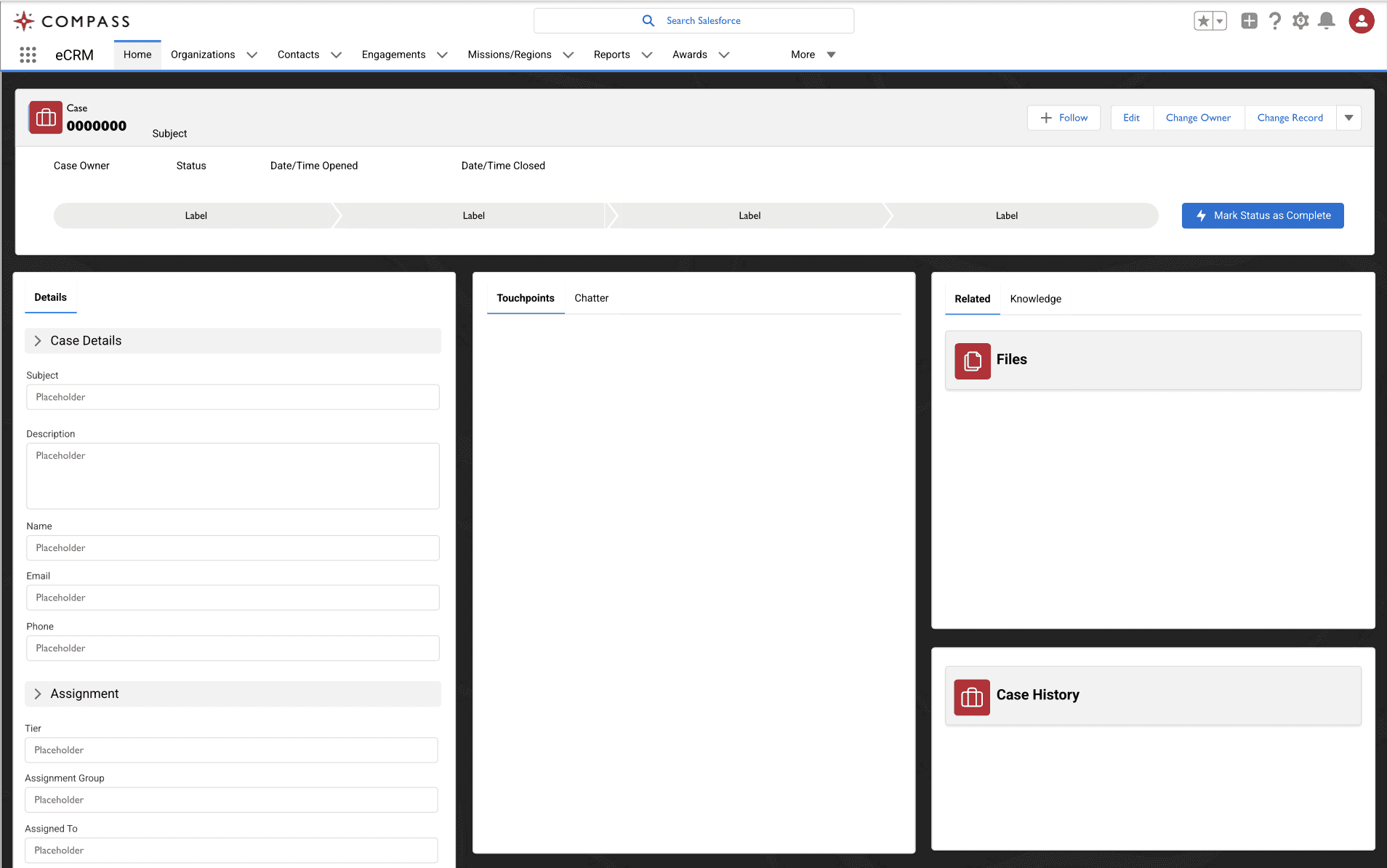
Inconsistent icon usage and unclear flows make it difficult for users to navigate efficiently, resulting in low engagement.
DEFINE
As a Design & Strategy, I defined goals to reach to improve the usability and interface of the CRM:
Goals
Prototype flows to support clearer, more efficient interaction in Figma
Translate user feedback and insights into improvements in the UI and design system.
DESIGN SOLUTION
Over three months, my team and I were able to create a product that met the needs of USAID. The finalized product was a redesign of the previous online management tool, and included more interactivity, messaging, task management, and map features to increase efficiency and engagement.
Simplified User Flows
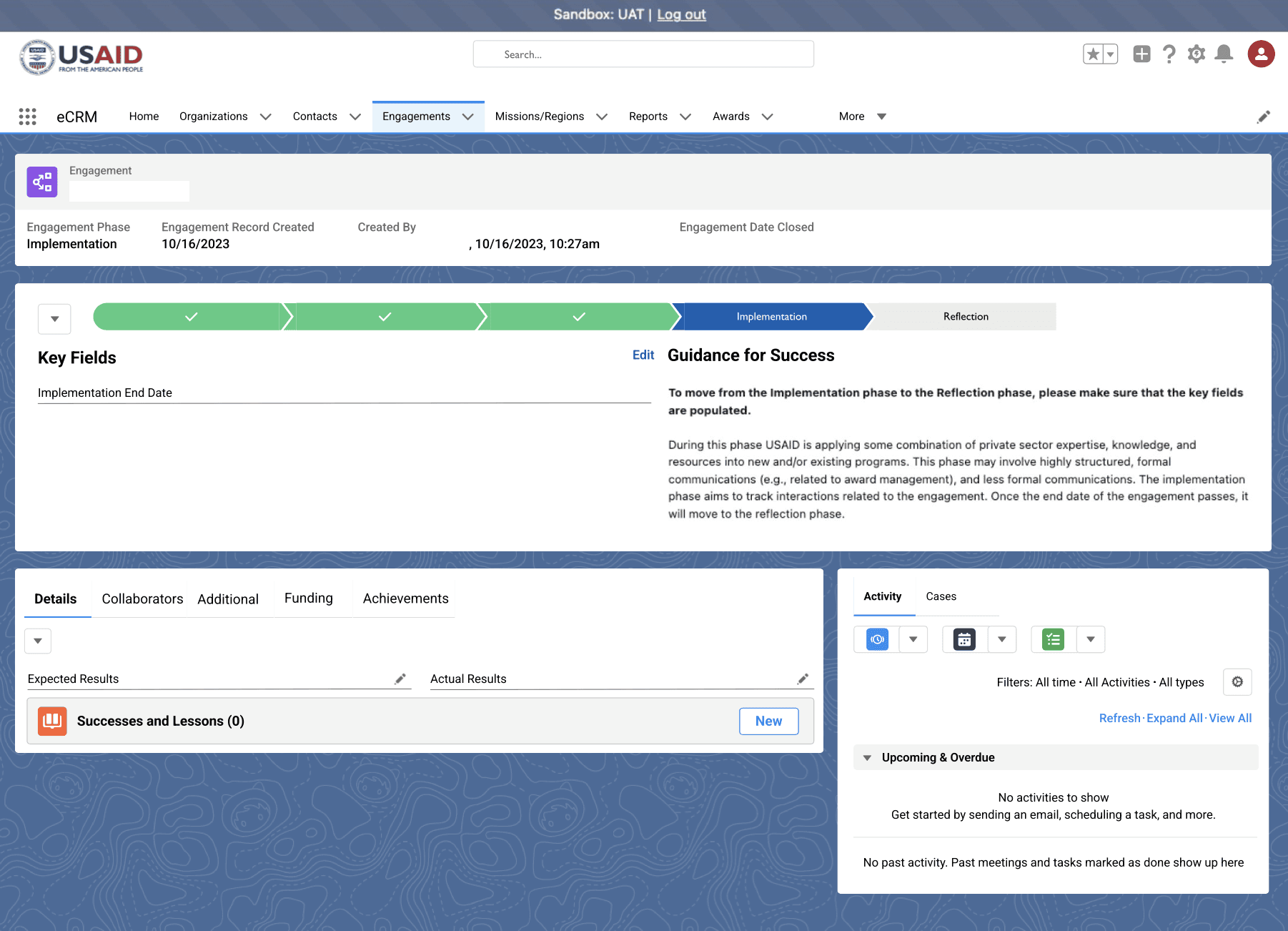
Implementation Phase of Organization Engagements
I focused on restructuring flows and interactions in Figma, so users could complete key actions (like entering federal partnership data) with fewer steps and clearer guidance, reducing cognitive overload.
The flow also simulated real workflows, allowing the team to conduct A/B testing and gather feedback for further development.
Improved Visual Hierarchy
I modified original icons for actionable items with the new icons from USAID branding, improving navigation to complete quick tasks. Additionally, the overall layout of the CRM was improved, such as making primary elements bolder and larger and using color contrast for names and headings.

Inputting Information in Discovery Phase of Organization Engagements
Country Engagement Input Flow
TAKEAWAYS
By using the tools in Figma, I was also able to bring these key decisions to life, creating a clear picture of the new design for developers. These prototypes were used in A/B Testing.
I learned the importance of adaptability. Joining the team midway required me to quickly get up to speed, proactively communicate when I needed guidance, and not hesitate to speak up. I also gained experience working in a government environment where external uncertainties could directly impact our projects, which taught me to stay flexible and focused despite shifting conditions.

Role
Team
Design & Strategy Intern
Steampunk USAID Team (1 SCRUM Master, 2 Product Managers, 3 UX Designers, 2 Service Designers, 5 Developers, 1 QA Specialist
Duration
Jun - Aug 2024
OVERVIEW
The United States Agency for International Development (USAID) is the federal government's primary agency for delivering foreign aid and development assistance around the world. USAID partners with governments, NGOs, and communities to advance global health, education, and economic growth.
Previously, Steampunk designed and launched USAID’s first Salesforce CRM, creating a centralized platform for data management and operations across a global workforce of over 10,000 employees.
CHALLENGE
A year after launch, the new CRM was seeing low employee engagement, limiting its impact across the organization. My team and I were tasked with understanding why users were not embracing the platform and identifying solutions to improve adoption and usage.
DISCOVERY
Familiarity vs. Friction
From user interviews, an interesting observation was that employees often returned to the legacy USAID platform, despite access to the new CRM platform. Users noted that the CRM introduced friction and confusing navigation, making it harder to efficiently complete tasks.
Key Insights
Through observing early designs and participating in user interviews, I identified two critical issues:
High friction in data entry
Users found inputting information to be tedious and time-consuming.
Unclear interaction patterns
Inconsistent icon usage and unclear flows make it difficult for users to navigate efficiently, resulting in low engagement.
DEFINE
As a Design & Strategy defined goals to reach to improve the usability and interface of the CRM.
Goals
Prototype flows to support clearer, more efficient interaction in Figma
Translate user feedback and insights into improvements in the UI and design system.
DESIGN SOLUTION
Over three months, my team and I were able to create a product that met the needs of USAID. The finalized product was a redesign of the previous online management tool, and included more interactivity, messaging, task management, and map features to increase efficiency and engagement.
Simplified User Flows
Implementation Phase of Organization Engagements
I focused on restructuring flows and interactions in Figma, so users could complete key actions (like entering federal partnership data) with fewer steps and clearer guidance, reducing cognitive overload.
The flow also simulated real workflows, allowing the team to conduct A/B testing and gather feedback for further development.
Improved Visual Hierarchy
Inputting Information in Discovery Phase of Organization Engagements
I modified original icons for actionable items with the new icons from USAID branding, improving navigation to complete quick tasks. Additionally, the overall layout of the CRM was improved, such as making primary elements bolder and larger and using color contrast for names and headings.
Country Engagement Input Flow
TAKEAWAYS
By using the tools in Figma, I was also able to bring these key decisions to life, creating a clear picture of the new design for developers. These prototypes were used in A/B Testing.
I learned the importance of adaptability. Joining the team midway required me to quickly get up to speed, proactively communicate when I needed guidance, and not hesitate to speak up. I also gained experience working in a government environment where external uncertainties could directly impact our projects, which taught me to stay flexible and focused despite shifting conditions.